A registry is easiest when it reflects your real life. Build a first draft quickly, then improve it by removing “maybe” items and adding practical choices guests actually like to buy.
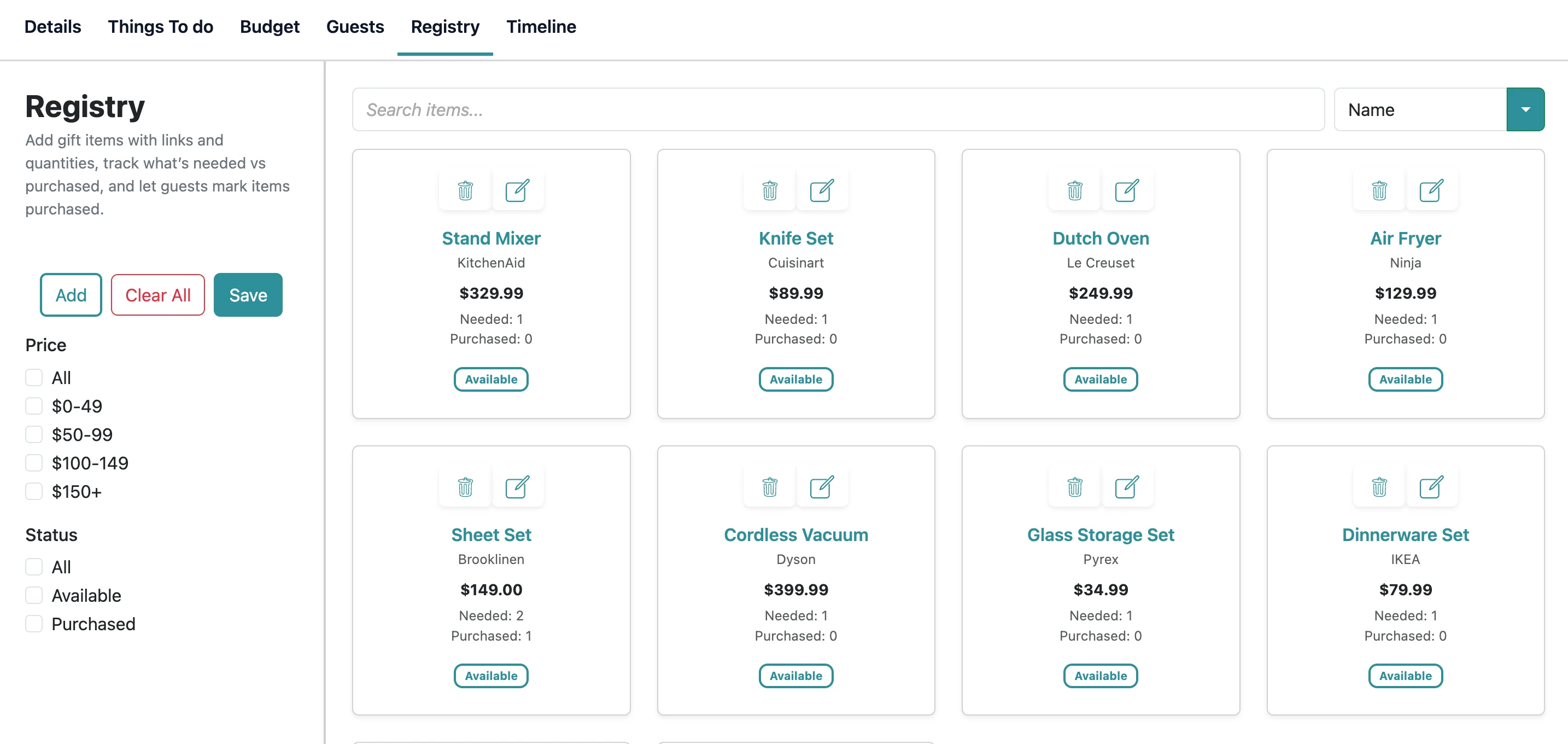
Set a simple goal for your registry
A registry works best when it has a clear purpose. Most couples use it to upgrade household basics, choose a few long-term items, and give guests easy options. Decide what you want your registry to accomplish, then build it to support those goals.
If you already live together and have essentials, focus on upgrades, experiences, and a few meaningful keepsakes. If you are starting from scratch, include foundational items that guests will feel good about gifting.
Practical step: pick five items you will definitely use in the next year. Add them first, then build around them with smaller add-ons and a few larger “group gift” picks.
Offer a range of price points without feeling awkward
Guests have different budgets. A strong registry includes a wide range of prices so every guest can choose something that feels comfortable. Include smaller items that are truly useful, medium items that solve common needs, and a few larger items for close family or group gifts.
Avoid filling the registry only with high-priced items. Balance makes gifting easier, and it helps guests feel like there are thoughtful options that fit their situation.
Common mistake: adding duplicates that are not intentional. If you want multiples (like wine glasses), label it clearly so guests understand.
Choose categories that match real life
Start with categories people understand: kitchen tools, cookware, linens, cleaning, storage, and small home upgrades. Then add categories that match your life, like travel gear, hosting items, or hobby supplies.
When you add an item, ask one question: will we use this in the next year? If the answer is not clear, skip it or replace it with something more practical.
Decision approach: compare options using the same assumptions. Note what is included, what you must add, and what could change the total cost. This prevents regret buys.
Make it easy for guests to shop and ship
Guests appreciate simple instructions and shipping options. If you register in multiple places, consolidate the list so guests do not have to search. In the planner, keep notes about where items are registered and how shipping works.
If guests are traveling, prioritize items that ship easily. Large or fragile items can be wonderful, but they often require delivery coordination.
Guest-friendly check: if someone is buying from their phone, can they find the item and check out in a minute or two? If not, simplify your setup.
Use group gifts and cash funds thoughtfully
Group gifts make larger items possible without pressuring one person to purchase them. If you include group gifts, describe them clearly so guests understand what they are contributing to.
Cash funds can also be helpful for a honeymoon plan or a home project. Keep the wording specific and sincere. Guests respond well to clarity and transparency.
Momentum tip: keep group gifts limited. A few great options are better than many expensive choices that feel repetitive.
Plan for thank you notes early
Thank you notes are easier when you plan them early. Track gifts as they arrive, write a short note while details are fresh, and set aside a small time block each week to send a few.
In your guest list, add a simple note for gifts and addresses. Keeping it in one place prevents the “where did we write that down” problem later.
Practical step: pick one day of the week for thank-you notes. Even 20 minutes weekly keeps you caught up.
Avoid common registry pitfalls
Do not register for items you do not want or will not use. A shorter registry that reflects your real life is better than a long list that feels random.
Avoid overly specific style items unless you are confident. If you are unsure, choose a flexible option (like a gift card) for that category instead.
Common mistake: leaving “must have” items off the list because they feel too practical. Guests often love gifting practical upgrades when you explain why you chose them.
Connect registry decisions to your budget and timeline
Your registry can support your budget. If you plan to host after the wedding, a few hosting items can reduce future spending. Use your budget to decide what you will buy yourselves and what you would love help with.
Then connect registry tasks to your checklist: build the registry early, review it, and share it at the appropriate time. With a simple plan, registry work becomes easy and low-stress.
Decision approach: treat your registry like a draft. Review it twice: once when you create it, and once after a few purchases so you can rebalance price points.
Related wedding planning guides
Keep your plan connected. These guides work together (checklist → budget → timeline → guests).
FAQs
Real questions people search while planning. Use these answers to make decisions faster.
What should be on a wedding registry checklist?
How many items should I put on my wedding registry?
What price points should a wedding registry include?
Should we register for cash funds?
When should we start a wedding registry?
How do we avoid duplicate gifts?
What if we already live together and have everything?
Do we need registry items for out-of-town guests?
Next steps
Pick one action you can complete today. Small progress makes planning feel lighter.