Planning feels easier when you can see the next step. Use this guide as a practical reference, then adapt it to your event, your guests, and your budget.
Start with the guest questions
Guests want clarity. Before you choose fancy wording, list the core details: who is being celebrated, what the event is, when it starts, where it is, and how to respond. If the invitation answers those questions, it is doing its job.
Then choose a tone. Your tone can be formal, casual, or in between. The best tone is the one that matches the event and feels like you.
Practical step: write one clear action you can complete in the next seven days. Then add it to your checklist with a realistic time block. When you finish that one action, planning feels lighter and you can build the next step from real progress.
What to include on almost every invitation
Most invitations need the same essentials: event title, date, start time, location name and address, and RSVP method with a deadline. If there is important parking guidance or a special entrance, include it clearly.
If the event has multiple parts, such as a ceremony and reception, make sure guests can see both times and locations. Guests should not have to guess.
Common mistake: trying to decide everything at once. Instead, decide what matters most, confirm that first, and let smaller details follow. If a choice changes your budget or timing, capture it in the planner so you do not rely on memory later.
Wording patterns for weddings
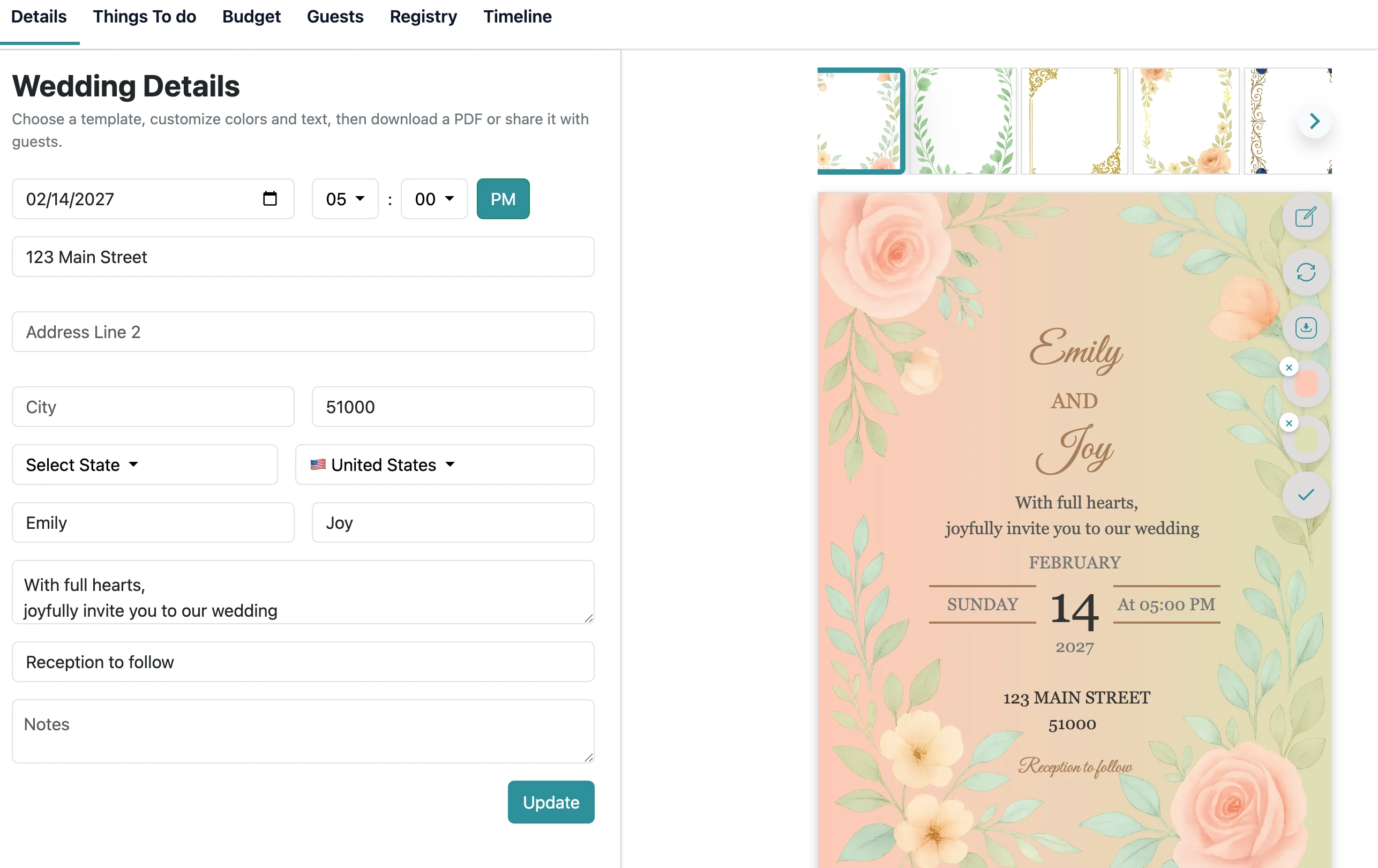
Wedding invitations can be simple. Here is a classic pattern: names of the couple, a request line, the date and time, and the location. If you have a dress code, include it on a details card or your website.
Example: “Together with their families, Alex and Jordan invite you to celebrate their wedding. Saturday, June 20, at four in the afternoon. Garden Hall, Chicago.” Adjust the names, date, and place to fit your event.
Decision approach: compare options using the same assumptions. List what is included, what you must add, and what could change the total cost. This keeps decisions fair and prevents surprises when you move from estimates to real bookings.
Wording patterns for baby showers
Baby shower invitations often work best with a warm, direct line that celebrates the parent. Include whether the shower is coed, whether kids are invited, and what time it starts and ends if that matters.
Example: “Please join us to celebrate Maya as she prepares to welcome her baby. Sunday, March 10, at two in the afternoon. Riverside Community Room.” Add registry or gift information carefully and kindly, often as a separate line or a website note.
Guest friendly check: imagine a guest arriving for the first time. Can they find parking, know where to go, and feel comfortable right away. If any step feels unclear, add one sentence of guidance to your plan and share it with helpers.
Wording patterns for birthdays
Birthday invitations should feel fun and clear. For kids parties, include whether parents should stay. For adult parties, include the vibe: dinner, game night, or casual gathering.
Example for kids: “You are invited to celebrate Sam turning six. Saturday, May 4, at three in the afternoon. 123 Oak Street.” Example for adults: “Join us for dinner to celebrate Taylor. Friday, July 12, at seven in the evening. Lakeside Bistro.”
Momentum tip: finish the small, boring tasks early. Addresses, vendor contacts, and supply lists are not exciting, but they prevent stress later. When those basics are done, you can enjoy the creative parts of planning without last minute pressure.
How to mention gifts without making it awkward
Gift wording can feel sensitive. The simplest approach is to share registry details on a website or a separate card. If you do mention gifts on the invitation, keep it short and grateful.
If you prefer no gifts, you can say so politely. Example: “Your presence is the best gift.” If gifts are welcome, you can use a neutral line like “Registry details available on our website.”
Practical step: write one clear action you can complete in the next seven days. Then add it to your checklist with a realistic time block. When you finish that one action, planning feels lighter and you can build the next step from real progress.
Dress code and special notes
If you have a dress code, be specific and kind. Instead of vague labels, add a short description. For example, “Cocktail attire” can be followed by “jacket optional” if you want to reduce pressure.
If there are important notes like outdoor ceremony or grass seating, include them. Guests appreciate practical information.
Common mistake: trying to decide everything at once. Instead, decide what matters most, confirm that first, and let smaller details follow. If a choice changes your budget or timing, capture it in the planner so you do not rely on memory later.
RSVP wording that gets better responses
RSVP wording works when it includes a deadline and a clear method. Example: “Please respond by April 1” plus a website link or contact method. If you need meal choices, ask for them in the RSVP flow rather than on the main invitation.
After you send invitations, plan a friendly follow up message. Most guests respond quickly with a gentle reminder.
Decision approach: compare options using the same assumptions. List what is included, what you must add, and what could change the total cost. This keeps decisions fair and prevents surprises when you move from estimates to real bookings.
Related wedding planning guides
Keep your plan connected. These guides work together (checklist → budget → timeline → guests).
FAQs
Real questions people search while planning. Use these answers to make decisions faster.
What should wedding invitation wording include?
How do you word a wedding invitation for parents hosting?
Can wedding invitations say 'reception to follow'?
How do you word an adults-only wedding invitation?
What’s the best RSVP wording?
Should we include registry info on the invitation?
How do you word dress code on wedding invitations?
How do you word a small or intimate wedding invitation?
Next steps
Pick one action you can complete today. Small progress makes planning feel lighter.