A venue is more than a pretty backdrop. It controls the biggest line items, the rhythm of the day, and how easy it is for guests and vendors to move from moment to moment. The goal is simple: choose a space that makes the day feel smooth.
Define your must-haves before you tour
Tours are emotional, so decide your non-negotiables before you step into your first venue. Write them down. If a space misses a must-have, it is not the right fit even if it photographs beautifully.
Examples of practical must-haves:
- Guest capacity that feels comfortable, not crowded.
- A ceremony plan (and a real indoor backup if weather changes).
- Accessibility basics: ramps, restrooms, and short walking distances for key guests.
- A location that works for your guest travel plan and hotel options.
- A setup that matches your style: all-inclusive support or a flexible “blank canvas.”
Keep your list short. Three to five must-haves is enough. Everything else is a preference you can trade when you see real prices.
Know what the venue price includes
“Venue price” can mean the space only, or it can include tables, chairs, staffing, security, cleaning, catering, a bar package, and coordination. Two venues with the same headline number can be thousands apart once you add what is missing.
Ask for an itemized list and confirm:
- What furniture and linens are included (and what upgrades cost).
- Whether setup/teardown is included, and who does it.
- Staffing requirements (bartenders, attendants, security) and minimums.
- Service fees, taxes, and gratuities (and what they apply to).
- Rain plan space fees and overtime rates.
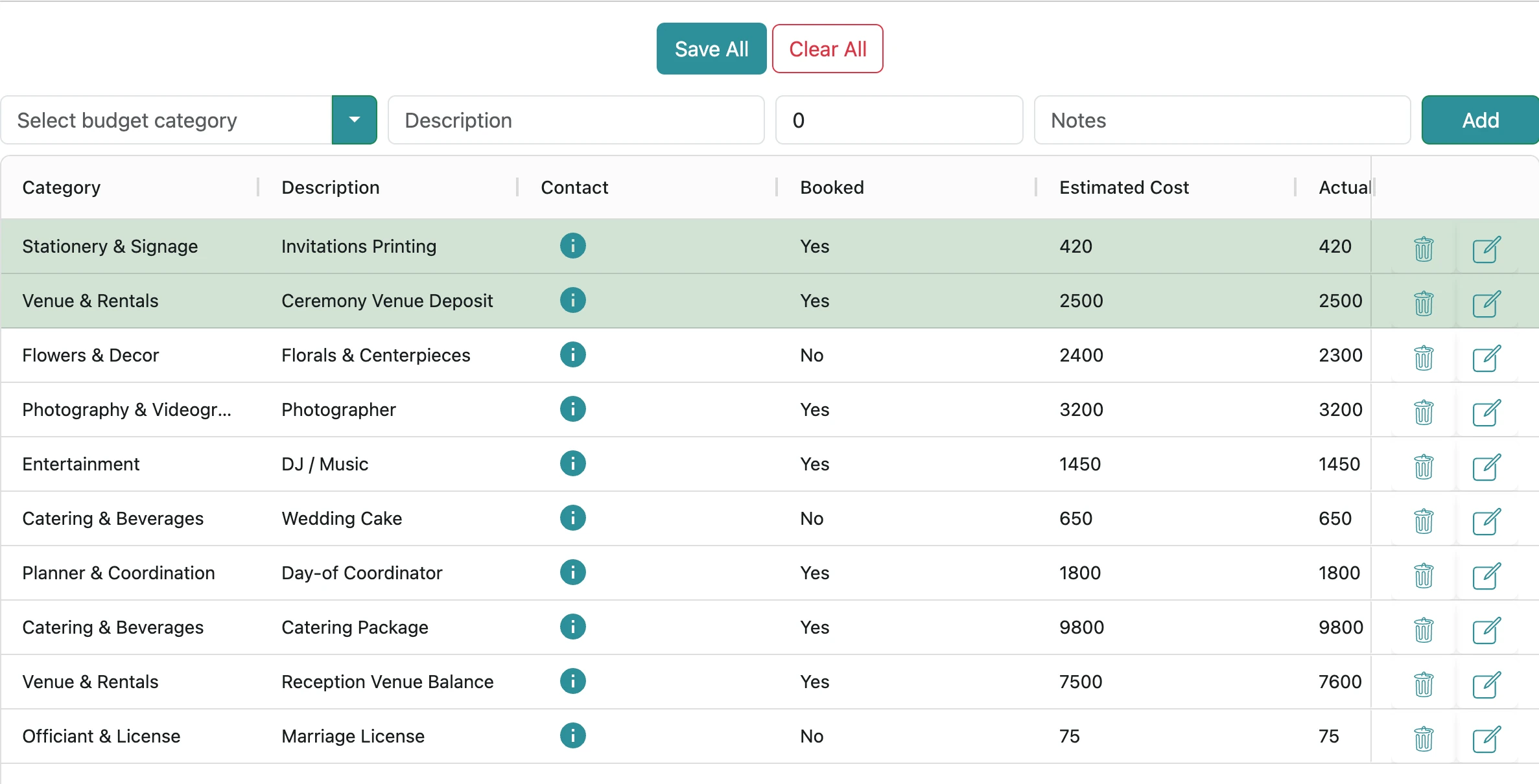
Record the “true total” in your Budget tab: venue fee plus required add ons. This keeps comparisons honest and prevents a low fee from turning into a high surprise later.
Ask questions that reveal how the day will actually work
The best venue questions are not about décor—they’re about logistics. Logistics are what determine whether the day feels calm or chaotic. Use questions that uncover timing, access, and constraints.
Tour questions that matter
- What time can vendors arrive and begin load-in?
- Where do vendors park and unload? Is there an elevator if needed?
- Where do guests park, and how do they find the entrance?
- What’s the noise policy and the hard end time?
- What happens if we run late? What is the overtime rate?
- What is the indoor backup plan, and when do we decide to use it?
- Who is on-site day-of, and what do they handle?
- Where can gifts, cards, and personal items be secured?
You’re looking for clear, confident answers. If answers are vague, that’s a signal: you may be responsible for solving problems on the day.
Evaluate guest comfort and flow
Do a “guest walk-through” during the tour. Picture arriving, finding parking, locating the ceremony, moving to cocktail hour, finding seats, and using restrooms. Flow problems show up when you act like a guest, not a planner.
Look for these comfort cues:
- Clear signage and a natural entrance path (no confusion points).
- Enough restrooms for your guest count and easy access.
- Shade, heating, or an indoor fallback for extreme temperatures.
- A smooth transition space between ceremony and reception.
- Accessibility: minimal stairs, stable walkways, and easy seating for key guests.
If the venue needs a lot of “we’ll figure it out,” it will likely create extra tasks (and extra costs) later.
Consider timing, season, and light
The same venue can feel completely different depending on the month and the hour. Outdoor ceremonies need a realistic plan for sun, wind, temperature, and daylight. If you can, tour at a similar time of day as your ceremony.
Photo timing matters too. Ask your photographer about golden hour and add a short block for it in your timeline. Ten to fifteen minutes can make a big difference—and it’s easier when the venue layout supports a quick exit and return.
Also consider guest travel. If your venue is far from hotels, plan shuttles or make travel instructions very clear. Your timeline is only as strong as your transportation reality.
Review the contract with care
The contract is where venue “policies” become real. Read it slowly, and confirm that anything you care about is written down. If the venue promises something verbally, ask for it in writing.
Contract items to double-check:
- Payment schedule, deposits, and what is refundable (and when).
- Cancellation and reschedule terms (including force majeure).
- Vendor restrictions and any required “approved vendor” lists.
- Insurance requirements and liability language.
- Alcohol rules, bartender requirements, and service cut-off times.
- Setup/teardown responsibilities, access windows, and overtime charges.
If you’re unsure about a clause, ask questions now. Contract clarity is one of the easiest ways to protect your future self.
Match your venue to your vendor plan
A venue is a good fit when your vendors can work efficiently in the space. Confirm practical requirements: kitchen access for catering, power for DJ/band, load-in routes for rentals, and a weather plan for ceremony setups.
If you already have a “must-have” vendor, verify they can work at the venue before you commit. It’s better to find a compatible venue than to force a vendor plan into a space that makes everything harder.
When vendors and venue align, the day runs smoother—and the timeline you build is more likely to hold.
Make a decision and move forward quickly
Once you have two or three strong options, choose with a simple framework: the venue that meets your must-haves, fits your real total budget, and creates the smoothest guest flow wins. Don’t keep touring forever. Decision speed creates momentum.
After you book, do these next:
- Update Wedding Details with the venue address, timing, and any venue rules.
- Update your Budget with the true venue total and required add-ons.
- Add checklist tasks for the next biggest bookings (catering, photography, music).
- Draft a first-pass timeline using the venue’s access windows and end time.
A confident venue choice isn’t perfect—it’s supported. When the space supports your plan, everything else gets easier.
Related wedding planning guides
Keep your plan connected. These guides work together (checklist → budget → timeline → guests).
FAQs
Real questions people search while planning. Use these answers to make decisions faster.
What should I ask when touring a wedding venue?
How far in advance do wedding venues book?
What hidden wedding venue costs should I watch for?
Should I pick the venue or the date first?
How do I compare venues fairly?
What’s a realistic capacity for comfort?
Do I need a venue with an indoor rain plan?
What deposit and payment schedule is normal?
Next steps
Capture your top venue options and compare the true totals. Then choose one path and build momentum.